
A dental bridge is one of the most common ways to replace one or more missing teeth, and it is completely normal to have questions before starting treatment. Will it hurt? How many appointments will it take? What actually happens once you are sitting in the chair? This guide walks through the entire dental bridge procedure, from the first exam to the final fitting, along with what recovery, cost, and daily life look like along the way.
Every mouth is a little different, though. The type of bridge you need, how many teeth are involved, and the condition of your remaining teeth and gums all shape the exact timeline and price, so think of the information below as a general roadmap rather than a guarantee of what your specific treatment will look like.
What Is a Dental Bridge?
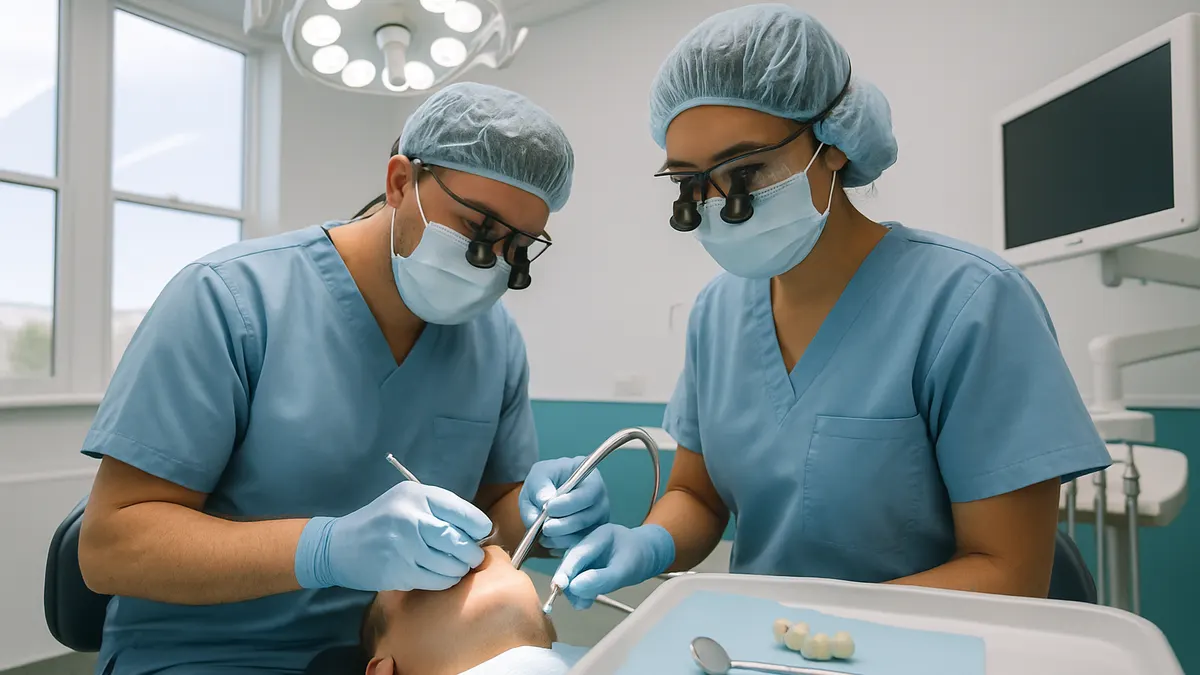
A dental bridge is a fixed restoration that closes the gap left by one or more missing teeth. It has two main parts: the pontic, which is the artificial replacement tooth, and the abutments, which are the natural teeth or dental implants on either side of the gap that hold everything in place.
Once it’s fitted, a bridge helps restore normal biting and chewing, supports clearer speech, and keeps neighboring teeth from tilting into the empty space over time. It also helps maintain the natural shape of the face, since a long-term gap can eventually affect how the cheeks and jaw look.
There are a few common types of bridges, and a dentist will recommend one based on the specific gap and the health of the surrounding teeth:
- Traditional bridge: supported by crowns placed on the natural teeth on each side of the gap
- Cantilever bridge: anchored by a single abutment tooth on one side only
- Maryland bridge: held in place with a thin framework bonded to the back of neighboring teeth instead of full crowns
- Implant-supported bridge: anchored by one or more dental implants rather than natural teeth
Who Is a Good Candidate for a Dental Bridge?
Not every gap is automatically a good fit for a bridge, and figuring that out is part of the initial visit. A dentist will typically look at:
- How many teeth are missing, and where they sit in the mouth
- Whether the teeth on either side of the gap are healthy and strong enough to support a crown
- Whether the gums are healthy and there is enough bone underneath to provide a stable foundation
- Overall oral hygiene habits and any history of decay or gum disease
- Whether a dental implant, partial denture, or another approach might be a better long-term fit
Missing even one tooth can set off a chain reaction, from shifting bite alignment to bone loss in the jaw, which is part of why dentists generally recommend addressing the gap sooner rather than later, as explained in this closer look at why replacing a missing tooth matters. If there’s active gum disease, untreated decay, or a supporting tooth that has been weakened by previous damage, those issues usually need to be treated first so the bridge has a stable foundation to sit on.
Dental Bridge Procedure: Step-by-Step
Knowing what happens at each visit can make the whole process feel a lot less unfamiliar. Here’s what most patients can expect.
Step 1: Initial Dental Examination
The first visit starts with an oral exam and, when needed, dental X-rays or other imaging to get a clear picture of the gap. The dentist checks the surrounding teeth, gums, bite alignment, and the bone underneath, then talks through which type of bridge fits the situation best. For patients weighing their options, it can also help to read up on how a bridge compares to a dental implant before deciding which direction to go.
Step 2: Preparing the Supporting Teeth
For a traditional bridge, the teeth on either side of the gap usually need to be reshaped slightly so a crown can fit over them securely. Local anesthesia keeps this part comfortable, so most patients feel pressure at most rather than pain. Exactly how much preparation is needed depends on the type of bridge being placed; implant-supported and Maryland bridges, for example, involve a different process that doesn’t reshape natural teeth the same way.
Step 3: Taking Impressions or Digital Scans
Once the teeth are prepared, the dentist records their exact shape and position, either with a traditional impression or a digital scan. These records go to a dental lab, where they’re used to custom-build a bridge that matches the size, shape, and color of the surrounding teeth.
Step 4: Temporary Dental Bridge
While the permanent bridge is being made, a temporary one is often placed to protect the prepared teeth and let the patient keep a normal appearance and basic function in the meantime. A temporary bridge isn’t as strong as the permanent version, so it’s worth being gentle with it: avoid sticky or very hard foods, and be careful when flossing around it until it’s replaced.
Step 5: Permanent Bridge Placement
At the final appointment, the dentist checks the finished bridge for fit, appearance, bite, and overall comfort before attaching it securely in place. Small adjustments are common at this stage to make sure the bite feels natural and even. Once everything checks out, the bridge is ready for normal daily use.
How Long Does a Dental Bridge Procedure Take?
The overall timeline depends on the type of bridge, how long the lab takes to fabricate it, how many teeth are involved, and whether any other dental work needs to happen first. It helps to separate chair time, meaning the length of each individual appointment, from the total treatment timeline, which is usually spread across a few weeks to allow for lab fabrication in between visits.
Implant-supported bridges generally take longer overall, since the implant needs time to heal and fuse with the jawbone before the bridge itself can be attached. Traditional and Maryland bridges tend to move faster since they don’t require that healing period.
Is Getting a Dental Bridge Painful?
This is one of the biggest concerns patients bring up before treatment, and the short answer is that the procedure itself shouldn’t hurt. Local anesthesia numbs the area during tooth preparation and placement, so most people feel pressure or vibration rather than pain while the work is being done.
After the anesthesia wears off, it’s common to notice some temporary sensitivity or mild gum soreness for a day or two, especially around the prepared teeth. That usually fades on its own with basic care. Persistent or worsening pain, on the other hand, isn’t typical and is worth having a dentist take a look at.
Dental Bridge Recovery: What to Expect
The first few days after getting a bridge placed are mostly about adjusting. Mild sensitivity or gum tenderness is normal, and it can take a little time to get used to the feel of the new bridge when biting or speaking. Sticking to softer foods for the first day or two, keeping up with brushing and flossing carefully around the new bridge, and easing back into normal activities all help the process go smoothly. If pain increases instead of easing, or if something feels off with the fit, it’s best to contact the dentist rather than wait it out.
What Can You Eat After Getting a Dental Bridge?
Diet in the first few days matters more than people expect. A few practical guidelines:
- Start with softer foods if the mouth feels sensitive or tender
- Gradually reintroduce normal foods as comfort improves
- Avoid extremely hard or sticky foods that could stress a new or temporary bridge
- Chew carefully, especially on the side with the new bridge, and keep up with regular oral hygiene
How Long Does a Dental Bridge Last?
With good care, a dental bridge can last many years, sometimes a decade or more. How long it actually lasts depends on several factors:
- Daily oral hygiene habits
- Gum health around the abutment teeth
- The strength of the supporting teeth and how long their crowns hold up
- How much force the bite places on the bridge day to day
- Diet and habits such as teeth grinding
- Keeping up with regular dental visits
Eventually, most bridges need some kind of repair or replacement, often tied to how long the supporting crowns themselves hold up. Routine checkups make it much easier to catch small issues before they turn into bigger ones.
Dental Bridge Cost: What Affects the Price?
There’s no single price tag that applies to every dental bridge, because cost depends on a mix of factors:
- The type of bridge (traditional, cantilever, Maryland, or implant-supported)
- The materials used to make it
- How many teeth are being replaced
- The condition of the supporting teeth and whether they need extra treatment first
- Any additional procedures needed before the bridge can be placed
- Dentist and dental lab fees
- Geographic location
- Dental insurance coverage or available financing options
Because so many variables are involved, the only way to get an accurate estimate is through a personalized evaluation. A dentist can look at the specific gap, the health of nearby teeth, and the type of bridge that makes the most sense, then put together a cost estimate based on the actual treatment plan rather than a generic average.
Benefits and Potential Drawbacks of Dental Bridges
Like any dental treatment, bridges come with real benefits along with a few trade-offs worth knowing about upfront.
Benefits:
- Replaces missing teeth and restores a complete smile
- Restores normal chewing function
- Can noticeably improve appearance and confidence
- Helps keep remaining teeth from shifting out of alignment
- Traditional bridges usually don’t require surgery
Potential drawbacks:
- Supporting teeth need to be reshaped for a traditional bridge
- Poor oral hygiene can lead to problems around or under the bridge over time
- The supporting teeth and gums need ongoing care to stay healthy
- The bridge will likely need replacement at some point down the road
When Should You Contact Your Dentist After a Bridge?
Most recovery goes smoothly, but a few signs shouldn’t be brushed off:
- Persistent or worsening pain
- Significant sensitivity that doesn’t improve after a few days
- A bridge that feels loose or shifts when biting
- Difficulty biting or chewing normally
- Visible damage or cracking
- Swelling or bleeding around the gums
- Food that keeps getting trapped around the bridge
Any of these are worth a call to the dentist rather than waiting to see if they go away on their own.
Conclusion
A dental bridge remains one of the most reliable ways to replace missing teeth and restore everyday function, from chewing comfortably to speaking clearly. In general, the process follows a predictable path: consultation, preparation of the supporting teeth, impressions or digital scans, a temporary bridge while the permanent one is made, and finally the permanent placement, followed by ongoing recovery and maintenance.
If you’re missing one or more teeth and want to know whether a bridge is the right solution for you, a Dentist in Southampton can examine the gap, check your bite, and walk you through the option that fits your situation best.
Patients from Richboro, Feasterville, Holland, Langhorne, and Newtown regularly visit our Southampton-area practice for bridge consultations, exams, and ongoing dental care.
Frequently Asked Questions
It varies by case, but the full process, from the first exam through the permanent placement, typically spans a few weeks, mostly to allow time for the bridge to be custom-made at a dental lab.
No, the procedure itself is done under local anesthesia, so it shouldn’t hurt. Some mild soreness or sensitivity for a day or two afterward is normal.
Most people adjust to a new bridge within a few days to a week. Any mild tenderness usually fades quickly with basic care.
Yes, once you’ve adjusted. It’s best to start with softer foods right after placement, then gradually work back to a normal diet as comfort improves.
Many bridges last 10 years or longer with good oral hygiene, healthy supporting teeth, and regular dental visits.
Cost depends on the type of bridge, materials, how many teeth are replaced, and other factors, so a personalized evaluation is the only way to get an accurate number.
Yes, a bridge can replace more than one missing tooth in a row, as long as the supporting teeth or implants on either side are healthy enough to anchor it.
Yes, and it’s an important part of keeping the bridge healthy. Floss threaders or water flossers make it easier to clean underneath the pontic.
A loose bridge should be checked by a dentist as soon as possible, since bacteria can get underneath it and affect the supporting teeth if it’s left untreated.
Neither option is universally better. Bridges and implants each have their own advantages depending on the number of missing teeth, bone health, and personal preference, which is why a dentist’s evaluation matters.