
Professional teeth whitening is a cosmetic dental treatment that lightens teeth by reducing stains and discoloration. Instead of simply polishing the surface, a dentist uses a peroxide-based whitening agent that works inside the enamel, and adjusts the approach to your teeth, gums, and goals.
If you are wondering how it works, the short answer is this: a dentist examines your mouth, protects your gums, applies a whitening gel for a set time, and checks the shade change. Each step is there for a reason. This guide walks through the process, the options, the limits, and the aftercare, so you know what to expect. For personalized professional dental care and cosmetic treatment guidance, a dental exam is always the right place to start.
What Is Professional Teeth Whitening?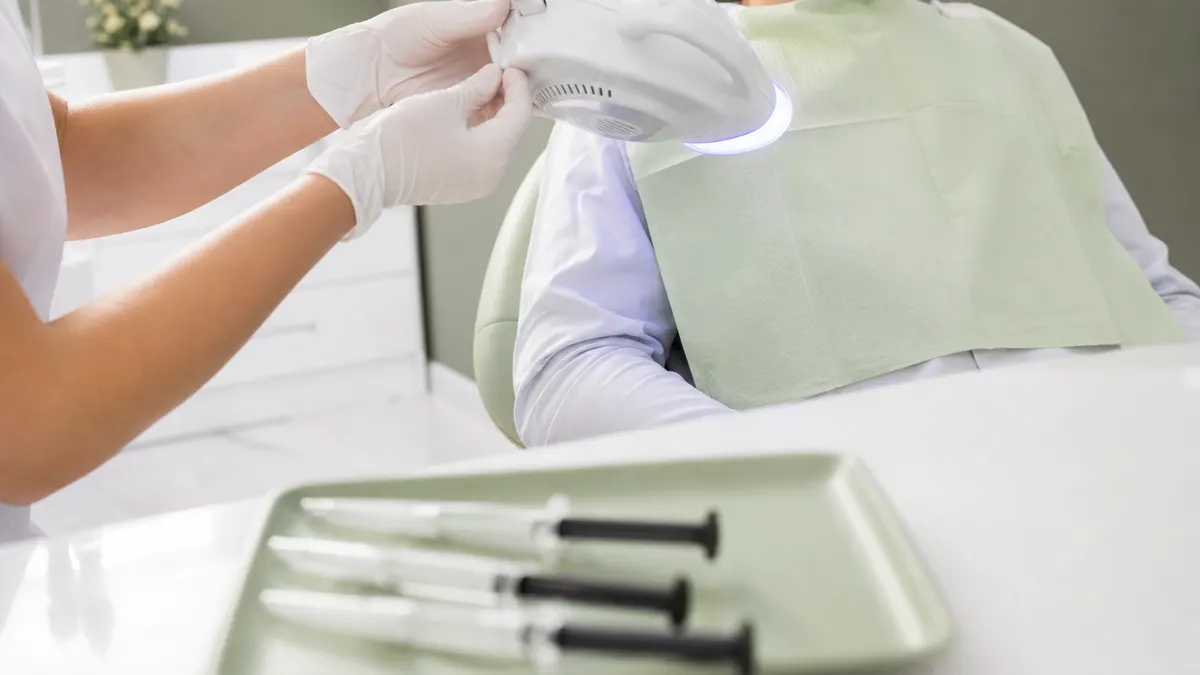
Professional teeth whitening, sometimes called professional teeth bleaching, is a dentist-supervised treatment that uses a whitening agent, usually hydrogen peroxide or carbamide peroxide, to lighten the natural color of your teeth. The dentist controls the product, the application, and the protection of your gums.
This is quite different from whitening toothpaste. Most whitening toothpastes help remove surface stains through mild abrasives or low-level cleaning agents, but they generally do not change the deeper color of the tooth. Professional whitening agents are designed to reach inside the enamel, where many long-standing stains sit.
A dental examination matters because whitening only works on natural tooth structure, and it is not right for every situation. Cavities, gum disease, worn enamel, or cracked teeth should be treated first. Whitening over untreated problems can cause discomfort and may hide issues that need care.
How Does Professional Teeth Whitening Work Step by Step?
The exact protocol depends on the whitening system and your dentist’s recommendations, but the professional teeth whitening process generally follows these steps.
1. Initial Dental Examination
The dentist checks your teeth, gums, and any existing fillings, crowns, or veneers. They also look for the cause of the discoloration. Coffee, tea, red wine, and tobacco tend to cause surface stains. Aging, certain medications, trauma, or enamel changes can cause deeper discoloration, which may respond differently to whitening.
2. Selecting the Appropriate Whitening Treatment
Next, the dentist considers your current shade, tooth sensitivity, oral health, and cosmetic goals. Someone with sensitive teeth may be offered a gentler, more gradual approach, while someone preparing for a special event may prefer a single in-office visit.
3. Preparing the Teeth
When appropriate, the teeth are cleaned first so plaque and surface stains do not block the gel. A protective barrier or gel is then placed over the gums and soft tissues, because peroxide can irritate them.
4. Applying the Professional Whitening Gel
The dentist applies a peroxide-based gel to the front surfaces of the teeth. Hydrogen peroxide and carbamide peroxide release oxygen molecules that penetrate the enamel and break stain molecules into smaller, less visible pieces. The tooth itself is not painted white. The stain inside it becomes lighter.
5. Activating or Using the Whitening System
Professional systems differ, so the dentist follows the manufacturer’s protocol. Some gels work on their own for a set time, and some are used with a light or other activator. Light-assisted systems exist, but not every effective whitening treatment requires a special light.
6. Evaluating the Results
After the gel is removed, the dentist compares your new shade with your starting shade. Depending on the outcome, they may suggest another application, a take-home maintenance plan, or stopping there. Results vary from person to person, so no specific shade change is guaranteed.
What Types of Professional Teeth Whitening Treatments Are Available?
Most patients choose from a few dentist-supervised options. Reviewing the available professional teeth whitening treatment options with your dentist helps match the approach to your schedule, sensitivity, and goals.
- In-office whitening: Done in a single visit, with the dentist applying the gel and protecting the gums. It suits patients who want a visible change under direct supervision.
- Dentist-supervised take-home trays: Custom trays made to fit your teeth are used with professional-grade gel at home, usually over several days or weeks. The pace is gradual, and the custom fit helps keep gel off the gums.
- GLO professional whitening: GLO is a professional system that uses a heated, light-assisted device with whitening gel. Whether it is a good fit depends on your teeth and your dentist’s recommendation.
The main differences are convenience, treatment time, and how much of the process happens under supervision. Many patients find that in-office treatment is faster, while take-home trays offer more flexibility.
What Makes Professional Teeth Whitening Different from At-Home Whitening?
Over-the-counter strips, gels, and whitening toothpastes can help with mild surface staining. Professional treatment differs in several practical ways:
- Dental assessment: A dentist identifies the type of stain and checks for problems before whitening begins.
- Agent concentration and application: Professional gels are applied and timed under dental supervision, rather than guessed at home.
- Gum protection: Barriers or custom trays reduce contact between peroxide and soft tissue.
- Customization: The plan can be adjusted for sensitivity, existing restorations, and your target shade.
Neither route is a magic fix. At-home products may take longer and give more modest results, and professional treatment still cannot lighten everything. You can read more about the differences between professional and at-home whitening treatments before deciding.
How Long Does a Professional Teeth Whitening Appointment Take?
Appointment length depends on the whitening system, the number of gel applications, and your individual treatment plan. Some in-office visits fit into a single appointment, while take-home trays are used in short daily sessions over a longer period. Your dentist can give a realistic time estimate after your exam, and no timeframe or result should be promised in advance.
Does Professional Teeth Whitening Cause Tooth Sensitivity?
Some people notice temporary sensitivity or mild gum irritation. Peroxide can pass through the enamel and briefly irritate the nerve inside the tooth, which usually settles within a few days after treatment ends.
Sensitivity is more likely with thin enamel, exposed roots, receding gums, existing sensitivity, or longer gel contact. Dentists can lower the risk by adjusting gel strength, shortening application times, spacing out sessions, or recommending desensitizing products.
If you have cavities, cracked teeth, worn enamel, or gum disease, ask for an evaluation before whitening. Those conditions can make whitening uncomfortable and should be treated first.
How Long Do Professional Teeth Whitening Results Last?
There is no fixed answer, because whitening is not permanent. Results depend on your diet, tobacco use, oral hygiene, and how your teeth naturally stain. Frequent coffee, tea, red wine, or smoking can bring discoloration back sooner. Patients with careful habits and regular cleanings often keep their results longer, and many choose occasional touch-ups.
How Can You Maintain Your Teeth Whitening Results?
A few daily habits protect your investment:
- Brush twice a day with fluoride toothpaste and clean between your teeth.
- Keep up regular dental cleanings to remove new surface stains.
- Limit frequent sipping of coffee, tea, red wine, and dark sodas, or rinse with water afterward.
- Avoid tobacco products.
- Follow the aftercare instructions your dentist gives you.
- Ask about appropriate touch-up treatments instead of repeating whitening on your own.
It also helps to know the foods and habits that can affect whitening results, especially in the first days after treatment.
Who Is a Good Candidate for Professional Teeth Whitening?
Good candidates are generally adults with healthy teeth and gums whose discoloration comes from surface staining or age-related yellowing. Whitening may not be appropriate if you have untreated cavities, active gum disease, significant enamel wear, or severe sensitivity. It is also generally not recommended during pregnancy without guidance from your healthcare providers.
Restorations deserve special attention. Crowns, veneers, fillings, and bonding do not whiten the way natural enamel does, so whitening can leave them looking darker than the surrounding teeth. If you plan to whiten, your dentist can sequence treatment so replacements match your new shade. Deeper discoloration, such as tetracycline staining or trauma-related darkening, may respond only partly and may call for options like veneers or bonding.
Making an Informed Decision About Professional Teeth Whitening
Professional teeth whitening works by using a peroxide-based gel to break down stains inside the enamel, with a dentist examining your teeth, protecting your gums, and checking the results. Supervision matters because it helps catch problems first, reduces irritation, and sets realistic expectations. Before treatment, consider your oral health, any existing restorations, your sensitivity, and how you will maintain results afterward.
If you are curious about whitening, Miracle Dental Center can help you understand which options may suit your smile. Contact the office to schedule a consultation and talk through your goals. Miracle Dental Center in Feasterville-Trevose can review your needs and explain your options. Patients visit from nearby communities including Bensalem, Holland, Southampton, Newtown, Langhorne, and Richboro.
Frequently Asked Questions
It breaks stain molecules into smaller pieces. Peroxide gel releases oxygen that moves through the enamel and reacts with pigmented compounds, making them less visible.
It is often more controlled and customizable, though not automatically better for everyone. A dentist can check your oral health, protect your gums, and tailor the plan, while strips are a simpler option for mild staining.
It varies from person to person, so no specific number can be promised. Your starting color, the type of stain, and the system used all affect the outcome.
When done as directed under dental supervision, it is considered safe for healthy teeth. Temporary sensitivity can occur, and overuse of whitening products can cause problems, so follow your dentist’s guidance.
It depends on the system and your plan. In-office visits and take-home trays follow very different schedules, and your dentist can explain the timing after your exam.
Yes, temporary sensitivity is possible. It usually fades within days, and your dentist can adjust the treatment or suggest desensitizing care if it bothers you.
Yellow teeth often lighten noticeably, but “white” depends on your natural tooth color. Yellow tones from age or surface stains tend to respond better than gray or brown discoloration from deeper causes.
There is no single schedule. Many patients do occasional touch-ups rather than repeated full treatments, and your dentist can recommend a safe interval based on your teeth and results.