
Losing one or more teeth can affect more than just your appearance. It changes how you eat, how you speak, and even how you feel about yourself. Dentures have helped millions of people restore their smile, regain confidence, and get back to enjoying everyday life. Whether you’re exploring your options for the first time or looking to upgrade your current prosthetic, this guide walks you through everything you need to know — from how dentures work to how to care for them properly.
What Are Dentures?
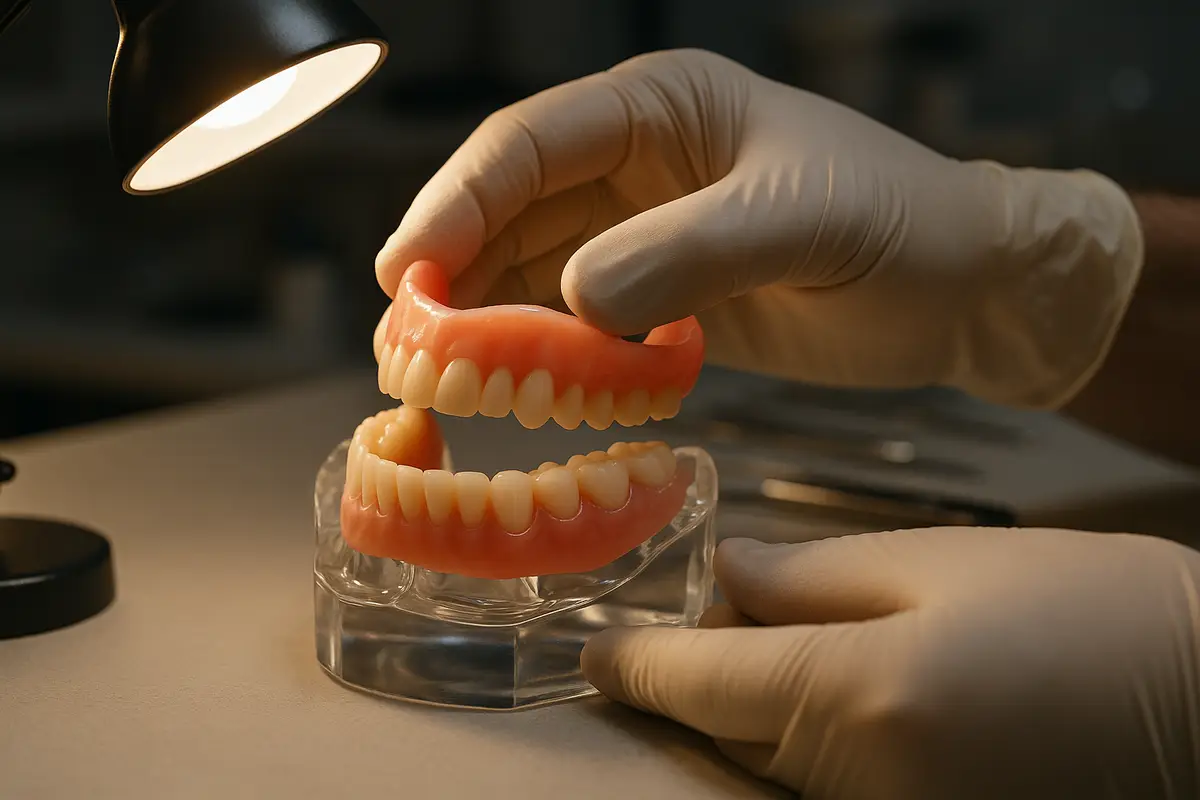 Dentures are removable dental appliances designed to replace missing teeth and the surrounding gum tissue. They’re custom-made to fit comfortably in your mouth and are crafted to closely resemble your natural teeth. Modern dentures look more natural and feel more comfortable than ever before, thanks to advances in dental materials and fabrication techniques.
They’re typically recommended when a patient has lost several teeth — or all of their teeth — due to decay, gum disease, injury, or age-related wear. At Miracle Dental Center, our team works closely with each patient to design a restoration that fits well and functions reliably.
Types of Dentures
Not all dentures are the same. Depending on how many teeth you’ve lost and your overall oral health, your dentist will recommend a specific type. Here’s a breakdown of the most common options:
Full (Complete) Dentures
Full dentures replace an entire arch of teeth — either the upper jaw, lower jaw, or both. They rest directly on the gum tissue and are held in place by suction and, in some cases, dental adhesive. These are typically recommended when all natural teeth in an arch have been removed.
There are two types of full dentures:
- Conventional dentures — placed after the gums have fully healed following tooth extractions (this can take several months).
- Immediate dentures — inserted the same day teeth are removed, so you’re never without teeth during the healing period. They may need adjustments as your gums heal and change shape.
Partial Dentures
If you still have some natural teeth remaining, partial dentures are often the better choice. These appliances fill the gaps created by missing teeth and are anchored to your existing teeth using clasps or attachments. Partials not only restore your smile — they also prevent your remaining teeth from shifting out of position over time.
You can learn more about your restoration options on our complete smile restoration page.
Implant-Supported Dentures
Implant-supported dentures offer the most secure and natural-feeling option. Rather than resting on the gums, these dentures snap onto dental implants that are surgically placed into the jawbone. This provides far greater stability — especially helpful when eating or speaking — and helps preserve bone density over time.
If you’re curious whether this option might be right for you, our team offers implant-supported restoration options that can be customized to your specific needs.
Snap-In Dentures (Overdentures)
A variation of implant-supported dentures, snap-in dentures attach to two or more implants and can be removed for cleaning. They’re more affordable than fully fixed implant solutions but offer much better retention than traditional removable dentures.
Benefits of Dentures
Dentures offer a range of meaningful benefits that go beyond aesthetics. Here’s why so many patients choose them as a tooth replacement solution:
- Restored chewing ability — Enjoy a wider variety of foods again and improve your nutrition.
- Improved speech — Missing teeth can cause slurred or mumbled speech. Dentures help restore clear communication.
- Enhanced appearance — A full set of teeth supports your facial structure and prevents the sunken look that can occur with missing teeth.
- Boost in self-confidence — A complete, natural-looking smile can significantly improve your quality of life and social interactions.
- Affordable tooth replacement — Compared to dental implants, traditional dentures tend to be a more budget-friendly solution for full-arch replacement.
- Customizable fit — Dentures are crafted specifically for your mouth, ensuring a comfortable and personalized fit.
Thinking about comparing your options? Our blog post on dental implants vs. dentures offers a helpful side-by-side comparison.
How Are Dentures Made?
Getting fitted for dentures involves several steps, usually spread across multiple dental appointments:
- Consultation and examination — Your dentist evaluates your oral health, takes X-rays, and discusses your goals.
- Impressions — Molds of your mouth are taken to ensure a precise fit.
- Custom fabrication — A dental lab creates your dentures based on the impressions and your chosen tooth shade and shape.
- Fitting and adjustments — Your dentist ensures the dentures fit properly, making any necessary refinements.
- Follow-up appointments — Regular check-ins ensure comfort, fit, and function over time.
The process requires patience, but the result is a restoration that’s uniquely tailored to you.
Caring for Your Dentures
Proper denture care is essential for both the longevity of your appliance and the health of your remaining gum tissue and teeth. Here are the most important daily habits to follow:
Daily Cleaning
Rinse your dentures after every meal to remove loose food particles. Use a soft-bristled denture brush and a non-abrasive denture cleaner — not regular toothpaste, which can scratch the surface and harbor bacteria. Clean all surfaces thoroughly, including the areas that contact your gums.
Soaking Overnight
Dentures need to stay moist to maintain their shape. When you’re not wearing them, soak them in a denture-soaking solution or plain water. Avoid hot water, as it can cause warping. Never let them dry out completely.
Handle with Care
Dentures are durable but breakable. When cleaning or removing them, stand over a folded towel or a sink with water to cushion them if they slip. Even a short drop onto a hard surface can crack or chip the appliance.
Keep Your Mouth Clean
Even without natural teeth, you still need to clean your gums, tongue, and palate every morning before putting in your dentures. This removes bacteria and stimulates circulation in the gum tissue.
Schedule Regular Dental Visits
Your gums and jawbone change shape over time, which means your dentures may need periodic relining or refitting. Regular checkups allow your dentist to catch these changes early. Our preventive care team is here to keep both your oral health and your denture function on track.
If you’re wondering how often you should be seen, our blog on why regular dental visits matter explains what to expect at each appointment.
Are Dentures Right for You?
Dentures are a reliable solution for many patients, but they’re not the only option. The right choice depends on how many teeth you’ve lost, your bone density, budget, and long-term goals. During your consultation, your dentist will review all available treatments and help you make an informed decision.
Patients who want a more permanent solution may want to explore dental implants. Those with only a few missing teeth might benefit from a partial denture or even a dental bridge. For patients who’ve lost all their teeth and want the feel of natural teeth without daily removal, All-on-X implant-supported restorations can be a life-changing option.
Our team at Miracle Dental is proud to serve patients from Richboro, Horsham, Bensalem, Langhorne, Montgomery County, and surrounding areas of Feasterville-Trevose. If you’re ready to explore your tooth replacement options, we’re here to help you find the best fit for your lifestyle and budget.
Dentures vs. Dental Implants: A Quick Comparison
Many patients ask how dentures compare to dental implants. Here’s a straightforward breakdown:
- Dentures — Removable, more affordable, suitable for patients with significant bone loss, require regular maintenance and possible refitting.
- Dental implants — Surgically placed, permanent, preserve jawbone, closer to the feel of natural teeth, higher upfront cost.
- Implant-supported dentures — A hybrid option that combines the affordability of dentures with the stability of implants.
For a closer look at the long-term value of implants, check out our post on the benefits of dental implants for lasting oral health.
If you’re also curious about tooth replacement in your area, explore dental implants in Richboro, PA as an alternative to traditional dentures.
Frequently Asked Questions About Dentures
With proper care, dentures typically last 5 to 10 years. Over time, normal wear and changes in your jaw structure may require relining, rebasing, or replacement.
There’s usually a short adjustment period. Most patients adapt within a few weeks and speak normally. Practicing out loud at home can help speed up this process.
Yes, though you may need to start with softer foods and gradually reintroduce harder or chewier items. Cut food into smaller pieces and chew on both sides of your mouth evenly to keep dentures stable.
Some minor soreness or irritation is common at first, especially with new dentures. This typically resolves after a short adjustment period. If discomfort persists, contact your dentist for an adjustment — never try to adjust dentures yourself.
Dentists generally recommend removing dentures at night to give your gums time to rest and recover. Overnight soaking also helps maintain the shape and hygiene of your appliance.
The cost varies depending on the type of denture, the materials used, and whether extractions are needed. Traditional dentures are generally more affordable, while implant-supported options involve a higher investment. We encourage you to ask about our financing options during your consultation.
Serving Patients Across the Greater Philadelphia Region
Miracle Dental Center is conveniently located in Feasterville-Trevose, PA, and proudly serves patients from throughout the region, including:
Whether you’re just starting to explore denture options or you’re ready to schedule your first consultation, our team is here to guide you every step of the way. Call us at (267) 990-8668 or visit us at 4911 Street Rd., Unit B, Feasterville-Trevose, PA 19053.
A healthy, complete smile is within reach — and we’re here to help you get there.