
A dental crown is a custom-made cap that fits over a tooth to restore its shape, strength, and function. Dentists recommend crowns for a wide range of reasons, from repairing a tooth weakened by a large cavity to protecting a tooth after root canal treatment. Because a crown becomes a permanent part of your bite, choosing the right material matters just as much as choosing the right dentist.
Several crown materials are available today, and each one strikes a different balance between strength, appearance, and cost. The best option for you depends on where the tooth sits in your mouth, how visible it is when you smile, how much chewing force it needs to withstand, and what fits your budget. This guide walks through each type of dental crown, how they compare, and how to decide which one is right for your situation.
What Is a Dental Crown?
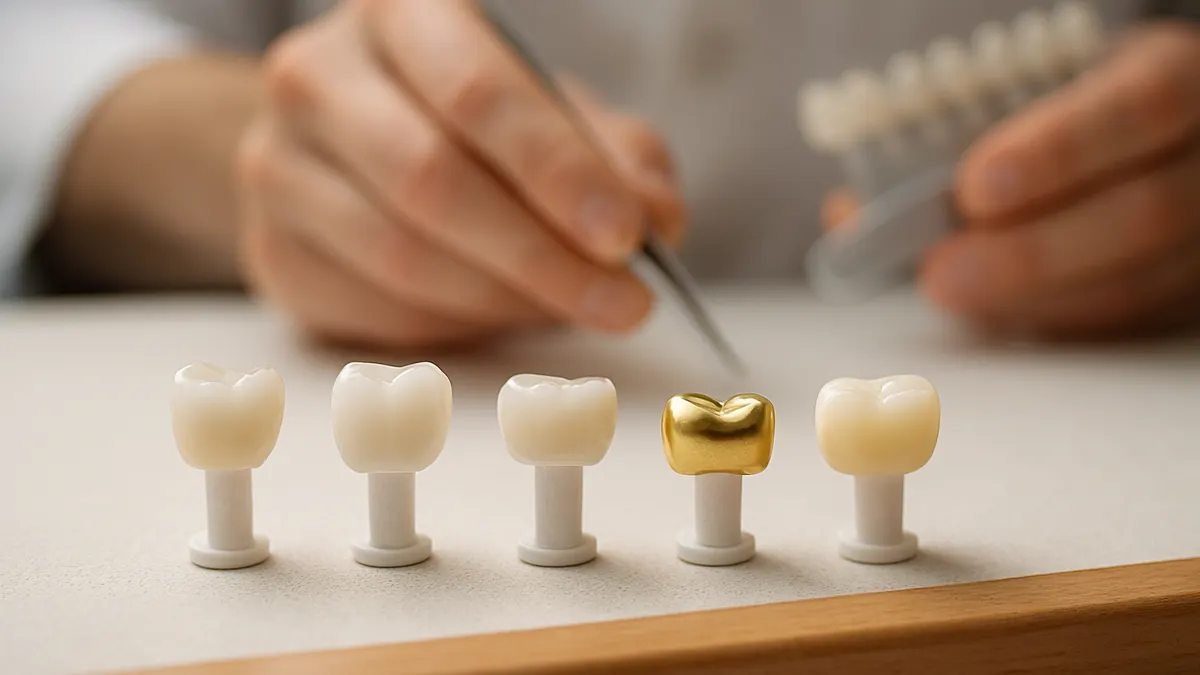
A dental crown is a tooth-shaped cover that fits over the visible portion of a tooth above the gumline. Once cemented into place, it acts as a protective shell, restoring the tooth’s shape and size while protecting the natural structure underneath.
Dentists commonly recommend a crown when:
- A cavity is too large for a standard filling
- A tooth is cracked or structurally damaged
- A tooth needs reinforcement after root canal treatment
- Years of wear or grinding have weakened the tooth
- An older crown is loose, damaged, or has decay underneath
- A tooth’s shape or color needs cosmetic improvement
In each case, a crown helps distribute biting force evenly, allowing you to chew comfortably while protecting the tooth from further damage. To understand the Dental crown procedure, from the initial exam to final placement,
What Are the Different Types of Dental Crowns?
Modern dentistry offers several crown materials, each engineered around a different set of priorities. Understanding what each one brings to the table makes it easier to have an informed conversation with your dentist.
Porcelain Crowns
All-porcelain crowns are prized for looking almost identical to natural enamel, which is why dentists often reach for this material on front teeth. Porcelain reflects light much the way real enamel does, and a skilled dental lab can shade-match a crown so it blends in with the teeth on either side of it.
Advantages: highly natural, translucent appearance; no visible metal at the gumline; a good option for patients with metal sensitivities.
Limitations: less impact-resistant than zirconia, so it is typically reserved for front teeth or lower-bite-force areas, and it can wear opposing teeth if not properly adjusted.
Ceramic Crowns
Ceramic crowns are a metal-free option built from advanced dental ceramics rather than a porcelain-and-metal blend. They are one of the most convincing crown choices for patients who want a completely natural, metal-free restoration. Modern ceramic materials have also become significantly stronger over the years, though they still tend to work best on front teeth and premolars rather than molars that absorb heavy chewing force.
A dentist can review ceramic crown treatment options with you to determine whether the material fits your bite pattern and cosmetic goals.
Zirconia Crowns
Zirconia is one of the strongest crown materials available, made from a durable, biocompatible material that holds up well under heavy biting force. Because of its strength, zirconia can be used on both front and back teeth, giving patients a single material that performs throughout the mouth. It is also a common recommendation for patients who grind or clench their teeth, since it resists chipping and fracturing better than porcelain alone. Zirconia can be layered with porcelain for a softer, more natural look, or left solid for maximum strength, and either version tends to last for many years with proper care.
Porcelain-Fused-to-Metal Crowns
Porcelain-fused-to-metal crowns, often called PFM crowns, combine a metal substructure with a porcelain outer layer. The metal base provides strength and a dependable fit, while the porcelain layer is shaped and shaded to look like a natural tooth. This combination has made PFM crowns a longtime standard for both front and back teeth.
Our overview of when a porcelain-fused-to-metal crown tends to make the most sense covers the situations where this hybrid design can outperform an all-ceramic option, along with its potential drawbacks, such as a thin metal edge that can occasionally show at the gumline as gums recede.
Metal Crowns
Metal crowns, typically made from gold alloys or other metal blends, are among the most durable crown options available. Because they withstand very high chewing forces without chipping or wearing down, metal crowns are most often placed on back molars, where strength matters more than appearance. Their main drawback is cosmetic: the metallic color stands out against surrounding teeth, which is why most patients prefer a tooth-colored option for teeth visible in their smile.
Resin Crowns
Resin crowns are typically the most affordable option and can be shaded to look reasonably natural. They are sometimes used as a temporary crown while a permanent restoration is being fabricated, though a lower-cost permanent resin crown is available in select cases. Resin wears down faster than porcelain, ceramic, zirconia, or metal, so patients choosing this material should expect a shorter lifespan and may need replacement sooner.
How Do Different Dental Crown Materials Compare?
Here is a simple side-by-side comparison of how the six crown materials stack up:
| Material | Appearance | Strength | Durability | Best Use | Cost | Metal-Free |
|---|---|---|---|---|---|---|
| Porcelain | Very natural, translucent | Moderate | Good | Front teeth | Mid to high | Yes |
| Ceramic | Very natural | Moderate to good | Good | Front teeth, premolars | Mid to high | Yes |
| Zirconia | Natural to solid white | Very high | Excellent | Front and back teeth, grinding | High | Yes |
| Porcelain-Fused-to-Metal | Natural with metal base | High | Very good | Front and back teeth | Mid to high | No |
| Metal | Metallic, not tooth-colored | Very high | Excellent | Back molars | Varies | No |
| Resin | Reasonably natural | Lower | Fair | Temporary or budget cases | Low | Yes |
Which Type of Dental Crown Is Best for Front Teeth?
For teeth that show every time you smile or speak, appearance usually takes priority. Porcelain, ceramic, and zirconia crowns are the most common recommendations for front teeth because all three can be shade-matched closely to the surrounding enamel. Porcelain and ceramic crowns tend to offer the most natural light reflection, which is why dentists often lean toward one of these two materials when a tooth is highly visible. Layered zirconia is also a strong front-tooth option when a patient wants both a natural look and extra resistance to chipping.
Other factors a dentist will weigh include how much of the natural tooth remains, whether the patient has a history of grinding, and how closely the crown needs to match the shade of the adjacent teeth.
Which Type of Dental Crown Is Best for Back Teeth?
Molars absorb the bulk of chewing force, so strength and durability typically outweigh appearance when choosing a crown for a back tooth. Zirconia is a frequent recommendation because it holds up well under heavy pressure while still offering a reasonably natural appearance. Metal crowns remain an option for patients who prioritize maximum durability over how the tooth looks, particularly for molars further back where visibility is minimal. Patients who grind or clench their teeth are often steered toward zirconia or metal for back teeth, since both materials resist the repeated stress that comes with bruxism.
How Do You Choose the Right Dental Crown?
Choosing the right crown comes down to weighing several factors together:
- Location of the tooth: front teeth prioritize appearance, back teeth prioritize strength
- Amount of tooth damage: more extensive damage may call for a more durable material
- Cosmetic goals: how closely the crown needs to match nearby teeth
- Bite and chewing pressure: some materials tolerate more force than others
- Oral health: gum health and remaining tooth structure affect which options are viable
- Teeth grinding or clenching: heavier materials often hold up better under bruxism
- Budget: material and lab costs vary considerably
- Dentist’s recommendation: a hands-on exam accounts for details a general guide can’t
Because these factors interact, the most reliable way to choose is a hands-on evaluation with a dentist who can examine the tooth directly. Patients looking for the Best Dentist in Southampton, PA can schedule an evaluation to get a personalized recommendation based on the condition of the tooth and their bite.
How Long Do Dental Crowns Last?
Most dental crowns last between 10 and 15 years, and many last considerably longer with good care and regular checkups. For a closer breakdown of what affects that timeline by material, see how long each crown material typically holds up.
A crown’s lifespan depends on several factors:
- Oral hygiene
- Diet and habits, such as chewing ice or hard candy
- Teeth grinding
- Regular dental visits
- Crown material
Signs a crown may need replacement include visible wear or chipping, sensitivity around the crown, a loose fit, or gum recession that exposes the crown’s edge.
How Much Do Dental Crowns Cost?
Crown costs vary depending on several factors, so there is no single price that applies to every patient. Material is one of the biggest cost drivers: full zirconia, all-ceramic, and PFM crowns generally cost more than metal or resin options because of the lab work and materials involved. The tooth’s location, the complexity of the case (for example, whether a root canal or additional buildup is needed first), and the dental office’s own pricing structure all factor into the final cost as well.
Dental insurance often covers part of the cost when a crown is medically necessary, such as repairing a fractured or decayed tooth, though coverage for purely cosmetic crown work is less common. Patients should check with their insurance provider and dental office to understand what portion of the cost will be covered before moving forward.
What Is the Process of Getting a Dental Crown?
- Dental examination: X-rays and a visual exam determine whether a crown is the right treatment and which material fits the case.
- Tooth preparation: The dentist removes a thin layer of the tooth’s outer surface so the crown can fit properly over what remains.
- Impressions or digital scanning: A precise mold or digital scan captures the tooth’s exact shape and sends it to the lab.
- Temporary crown, if needed: A temporary cap protects the prepared tooth while the permanent crown is being fabricated.
- Custom crown fabrication: A dental lab fabricates the permanent crown to match the patient’s bite, shade, and surrounding teeth.
- Crown placement and bite adjustment: The dentist cements the finished crown into place and checks that it feels comfortable when biting down.
- Follow-up care: A follow-up visit confirms the crown is settling in properly and addresses any lingering sensitivity.
How Should You Care for a Dental Crown?
- Brush twice daily with a fluoride toothpaste
- Floss gently around the crown, avoiding an upward pull on the margin where it meets the gum
- Keep up with regular dental checkups so a dentist can catch early signs of wear or decay underneath
- Avoid chewing on ice, hard candy, or other extremely hard objects
- Address teeth grinding, often with a nightguard, since untreated bruxism shortens a crown’s lifespan
Choosing the Right Crown for Your Smile
There isn’t a single crown material that works best for every patient or every tooth. Porcelain and ceramic crowns tend to shine on visible front teeth, zirconia and metal hold up well under the heavier forces molars face, and PFM crowns offer a middle ground of strength and appearance that has worked well for decades. Resin remains a budget-friendly option, particularly for temporary use. The right choice ultimately comes down to where the tooth sits, how much damage it has, your bite, and what matters most to you cosmetically and financially.
Because every mouth is different, the most reliable way to choose the right crown is a hands-on evaluation with an experienced dentist. Schedule a consultation today to get a personalized recommendation and find the crown option that fits your smile, your bite, and your budget.
At Miracle Dental in Feasterville, Richboro, Holland, Langhorne, and Newtown, patients can receive personalized guidance on dental crowns and other restorative treatments. Their dental team can assess your needs and help you choose a crown that supports both your oral health and smile.
Frequently Asked Questions About Dental Crowns
Zirconia is generally considered the strongest crown material available today, which is why it is commonly recommended for molars and for patients who grind their teeth.
Porcelain and ceramic crowns tend to look the most natural because they closely mimic the way light passes through real enamel.
Neither material is universally better. Zirconia offers more strength, while porcelain often provides a slightly more natural appearance, so the right choice depends on the tooth’s location and the patient’s priorities.
Most crowns last 10 to 15 years, and some last even longer depending on the material and how well the crown is cared for.
Yes. Porcelain, ceramic, and zirconia crowns are all commonly used on front teeth because they can be shade-matched to blend in with the surrounding smile.
Yes. Crowns can wear out, chip, or loosen over time, and a dentist can remove the old crown and replace it with a new one.
The procedure is done under local anesthesia, so most patients feel little to no pain during placement. Mild sensitivity afterward is normal and typically fades within a few days.
The right crown depends on the tooth’s location, the extent of the damage, your bite, and your budget and appearance goals, which is why an in-person evaluation with a dentist is the most reliable way to decide.