
You finally got that brighter, whiter smile you’ve been wanting. Feels great, right? But here’s the thing most people don’t think about until it’s too late: teeth whitening isn’t a one-and-done treatment. Without the right habits, that dazzling smile can start to fade faster than you’d expect.
The good news is that keeping your teeth white doesn’t require a complicated routine. It mostly comes down to a few smart daily choices and regular professional support. Below, we’re breaking down everything you need to know to protect your investment and keep your smile looking its best long after your whitening treatment.
Why Teeth Whitening Results Don’t Last Forever
Before diving into maintenance tips, it helps to understand what’s actually happening with your teeth after whitening. The bleaching agents used in professional whitening treatments work by opening the tiny pores in your enamel and breaking apart stain molecules. After treatment, those pores remain temporarily open and more susceptible to re-staining.
Over time, diet, lifestyle habits, and natural aging all contribute to gradual discoloration. Coffee, tea, red wine, berries, tomato sauce — all the flavorful things life is full of — can leave pigmented compounds behind on your enamel. Tobacco products are even more aggressive stain-producers.
That’s also why professional preventative care plays such an important role. Keeping enamel clean and healthy creates a better foundation for whitening results to last.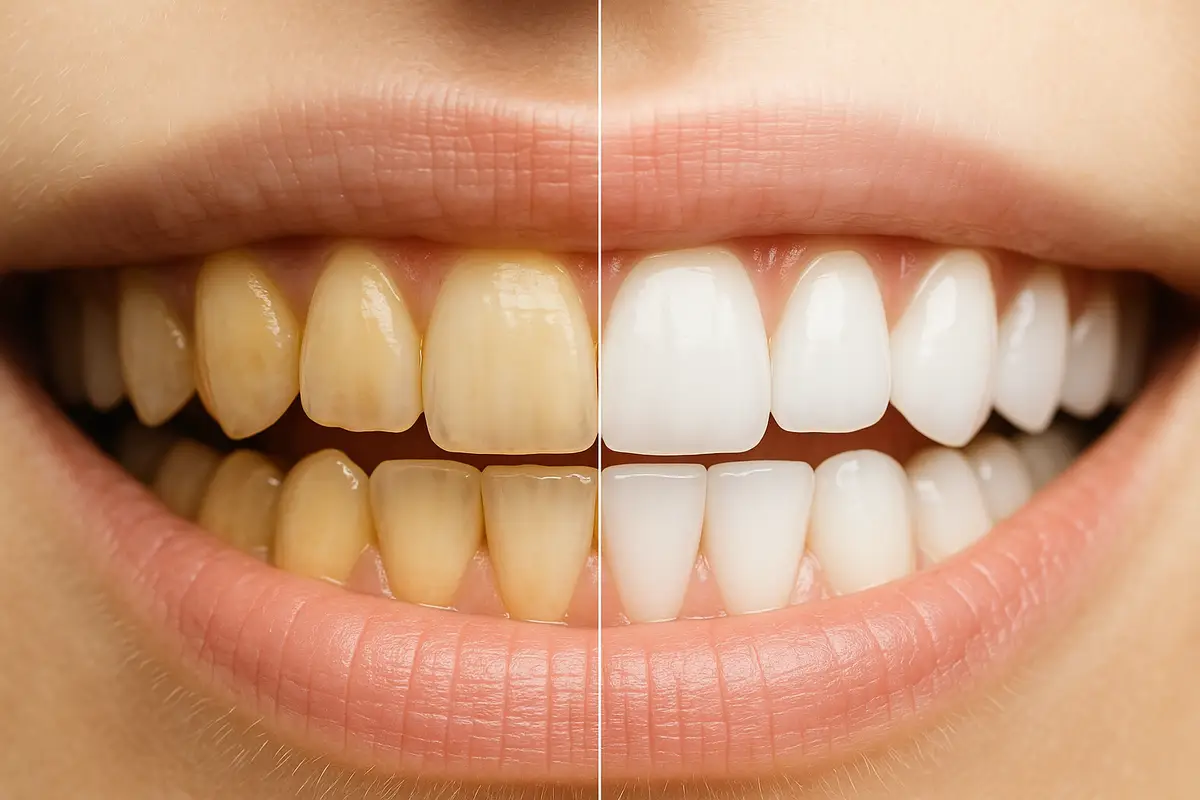
The First 48 Hours: The Most Critical Window
The 48 hours immediately following your whitening treatment are the most important for determining how long your results will last. During this window, your enamel pores are at their most open, meaning staining agents penetrate more easily than at any other time.
What to Avoid Right After Whitening
During the first two days post-treatment, stay away from:
- Dark beverages: coffee, tea, red wine, dark sodas, and grape or cranberry juice
- Pigmented foods: tomato-based sauces, soy sauce, beets, berries, and dark chocolate
- Tobacco products: both cigarettes and smokeless tobacco
- Strongly colored condiments like mustard or balsamic vinegar
- Acidic foods and drinks that can further open enamel pores
Dentists often call this the “white diet” window. Stick to lighter-colored foods like chicken, fish, rice, pasta with light cream sauces, bananas, and dairy products. It’s a short-term inconvenience that pays off long-term.
Daily Habits That Protect Your Whitening Investment
Once you’re past the initial sensitivity period, your day-to-day habits will determine whether your bright smile lasts three months or much longer.
Brush Consistently — But Gently
Brush at least twice a day using a soft-bristled toothbrush. Aggressive brushing doesn’t clean teeth better; it just wears down enamel over time, which makes staining easier. Use fluoride toothpaste and consider switching to a whitening-formula toothpaste for maintenance — but check with your dentist first to make sure it’s safe for your specific enamel.
Rinse After Eating or Drinking
If you’re going to enjoy a cup of coffee or a glass of red wine, rinse your mouth with water immediately afterward. This simple step flushes pigmented compounds off your teeth before they have a chance to settle in. You don’t need to brush immediately — in fact, brushing right after acidic drinks can actually scratch enamel — just a thorough water rinse goes a long way.
Use a Straw for Staining Beverages
Drinking through a straw minimizes contact between staining liquids and your front teeth. It sounds minor, but regular straw use for iced coffee, iced tea, or dark sodas can noticeably slow re-staining, especially on your smile line.
Don’t Skip Flossing
Whitening treatments brighten enamel surfaces but can’t reach between teeth. Plaque buildup in those tight spaces darkens over time and creates visible contrast against whiter tooth surfaces. Flossing once a day clears that buildup and keeps your whole smile looking uniformly bright.
For a complete picture of your at-home care routine, explore our general dentistry services and talk to our team about what works best for your specific whitening plan.
Professional Cleanings: The Cornerstone of Long-Term Brightness
Nothing replaces a professional cleaning when it comes to maintaining a white smile. Your dentist and hygienist have the tools and techniques to remove surface stains, calculus, and biofilm that home brushing simply can’t address.
Professional dental cleanings typically remove the surface-level staining that accumulates between whitening sessions, which keeps your teeth looking brighter even without frequent touch-up treatments. Most patients benefit from cleanings every six months, though your dentist may recommend a different schedule based on your individual stain-accumulation rate.
At Miracle Dental Center in Feasterville-Trevose, our team pairs professional cleanings with personalized advice on keeping your whitening results as long-lasting as possible.
Touch-Up Treatments: When and How Often
Even with excellent maintenance habits, whitening results will fade gradually. That’s completely normal and expected. The key is knowing when to schedule a touch-up rather than waiting until significant darkening has occurred.
Most patients find that an annual or semi-annual touch-up treatment — combined with strong daily habits — keeps their smile consistently bright. Others opt for at-home whitening trays between in-office appointments.
Miracle Dental offers professional teeth whitening with GLO™Science technology, which delivers consistent, comfortable results in a shorter treatment window than traditional whitening methods. Ask our team whether in-office touch-ups or take-home trays make more sense for your lifestyle and staining patterns.
Foods and Drinks That Cause the Fastest Re-Staining
Not all stain-causing items are created equal. Some cause significantly faster discoloration than others. If you’re looking to protect your results as long as possible, being mindful of these culprits makes a measurable difference:
- Coffee and tea: among the most common and aggressive stain sources due to their tannin content
- Red wine: high in both tannins and chromogens (color-producing compounds)
- Dark berries: blueberries, blackberries, and pomegranate juice leave intense pigment residue
- Tomato-based sauces: highly acidic and deeply pigmented
- Soy sauce and balsamic vinegar: concentrated dark compounds that stain quickly
- Tobacco products: produce tar and nicotine stains that are among the most stubborn to remove
You don’t have to give these up entirely — just be strategic. Drink water alongside them, use a straw when possible, and rinse immediately after eating or drinking.
Protecting Your Smile with Cosmetic Options
Some patients find that pairing whitening maintenance with other cosmetic treatments gives them an even brighter baseline to protect. For example, dental bonding can address chips and discoloration on individual teeth, while veneers create a longer-lasting bright surface that resists staining more effectively than natural enamel.
If you’re interested in exploring complementary options, take a look at our cosmetic dentistry procedures to see what might work alongside your whitening maintenance plan. Our team also offers dental veneers for patients looking for a longer-term solution for a consistently bright smile.
What Whitening Products Actually Work at Home
Between professional appointments, plenty of at-home options can support your maintenance routine. Here’s how to think about them:
Whitening Toothpaste
Whitening toothpastes use mild abrasives or low-concentration bleaching agents to address surface stains. They’re useful for maintenance but won’t dramatically brighten teeth the way professional treatments do. Look for products with the ADA Seal of Acceptance and avoid anything with excessive abrasives.
Whitening Mouthwash
Some whitening rinses contain hydrogen peroxide in low concentrations. They’re not powerful enough to whiten significantly on their own, but they can help neutralize surface staining when used consistently as part of your routine.
At-Home Whitening Trays from Your Dentist
Custom-fit trays made by your dentist are the most effective at-home whitening option available. Unlike over-the-counter trays, they’re precisely molded to your teeth, which ensures the whitening gel reaches every surface evenly without irritating your gums. Ask our team about take-home tray options at your next appointment.
More Smile Care Resources from Miracle Dental
If you’re exploring how to keep your smile in top condition beyond whitening, these resources from our blog may be helpful:
Learn about the full smile transformation potential of dental veneers, which can complement or maintain whitening results for patients who want a more permanent solution.
Explore how clear aligners and Invisalign treatment can be coordinated with whitening for a fully refreshed smile.
Read about what makes a dental practice the right choice for families — because whole-family dental care supports better long-term oral health for everyone.
Patients throughout the area trust Miracle Dental for professional, personalized care. Whether you’re looking for the
Whether you’re looking for the Best Dentist In Horsham, PA or exploring Best Dental Implants in Horsham PA, our nearby Feasterville-Trevose team is here to help you achieve and maintain a smile you’re proud of.
Frequently Asked Questions About Maintaining Teeth Whitening Results
Results vary depending on individual habits and diet, but most patients can expect professional whitening to last anywhere from six months to two years. Patients who avoid heavy staining foods and drinks, maintain strong oral hygiene, and schedule regular professional cleanings tend to see longer-lasting results. Touch-up treatments every six to twelve months help most patients maintain consistent brightness.
For the first 48 hours after whitening, it’s best to avoid coffee entirely. After that window, drinking coffee through a straw and rinsing your mouth with water immediately afterward will significantly reduce staining. Switching to lighter-roast coffees or adding a splash of milk can also slightly reduce the staining impact compared to dark, black coffee.
Whitening toothpaste can help control surface-level staining between professional treatments, but it’s not powerful enough to maintain or enhance the brightness achieved through professional whitening on its own. It’s most effective when used alongside regular cleanings, good dietary habits, and periodic touch-up treatments.
When performed professionally or with dentist-supervised at-home kits, teeth whitening is considered safe and does not cause permanent enamel damage. Temporary sensitivity is common but typically resolves within a day or two. Over-the-counter products used excessively or incorrectly carry a higher risk of enamel irritation, which is one reason professional guidance is recommended.
Most patients benefit from a touch-up treatment once or twice per year, depending on their diet and staining habits. Some opt for annual in-office treatments combined with take-home maintenance trays for use every few months. Your dentist can recommend the right schedule based on how quickly your teeth tend to re-stain.
Dentist-provided custom-fit whitening trays are the most effective at-home option because they ensure complete coverage and minimize gum exposure to the whitening agent. Whitening toothpaste and mouthwash can supplement your routine. Avoid overusing OTC whitening strips, as excessive use can cause sensitivity and uneven results.
Serving Patients Across the Region
Miracle Dental Center proudly serves patients from communities throughout Bucks County, Montgomery County, and the greater Philadelphia area, including:
Our practice in Feasterville-Trevose is conveniently located to welcome patients from all of these communities and surrounding neighborhoods. We look forward to helping you maintain a healthy, radiant smile.