
Metal brackets and wires used to be the only path to a straighter smile, but orthodontics has moved well beyond that single option. Today’s patients can choose from ceramic, lingual, and self-ligating braces, along with removable clear aligners, and each is suited to different orthodontic needs, daily routines, and appearance preferences.
This guide walks through the most common types of braces and what sets each one apart. Because every mouth is different, only an orthodontist can determine which treatment fits a patient’s teeth and bite after a hands-on evaluation.
What Are Dental Braces and How Do They Work?
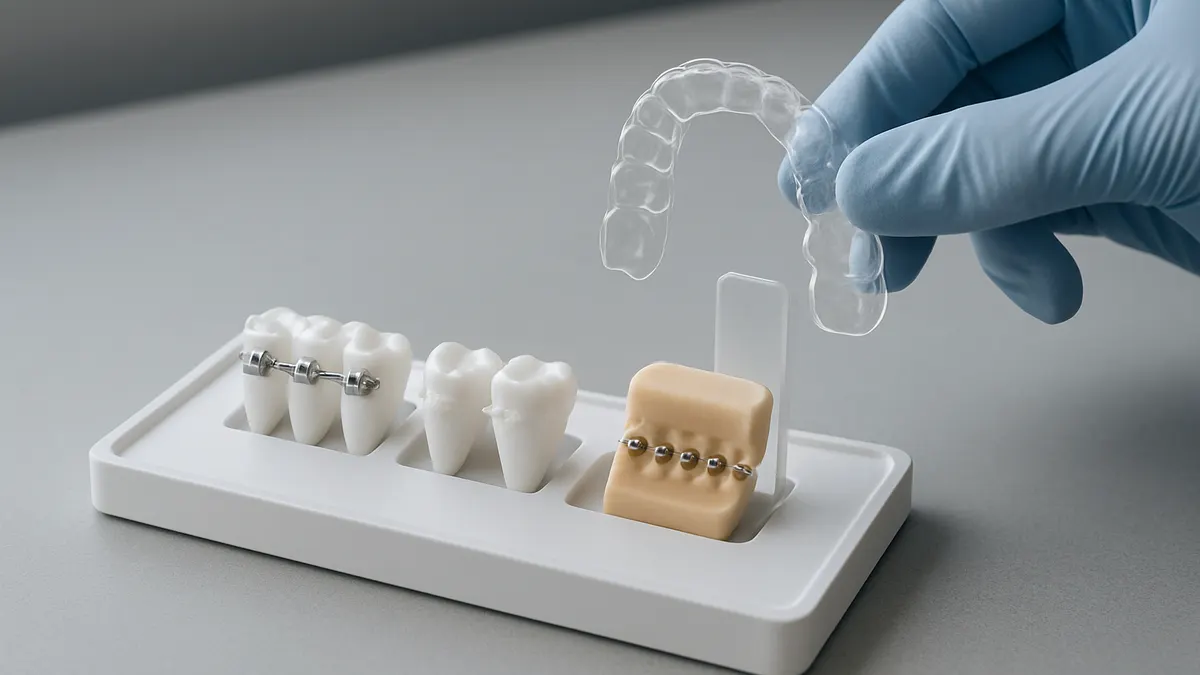
Dental braces are orthodontic devices designed to gradually shift teeth into a healthier, more aligned position. Traditional systems rely on brackets bonded to each tooth and connected by an archwire, which applies steady pressure over time. Clear aligner systems use a series of custom trays instead of brackets and wires, moving teeth in small increments with each new tray in the series.
Braces can address a wide range of concerns, including crowded teeth, gaps between teeth, crooked alignment, and bite issues such as overbite, underbite, and crossbite. Treatment length depends heavily on the complexity of the case. Minor spacing issues may resolve in under a year, while more involved bite corrections can take two years or longer.
Types of Dental Braces
Traditional Metal Braces
Traditional metal braces use stainless steel brackets bonded to each tooth and connected with an archwire that is adjusted periodically to guide teeth into place. They remain one of the most common orthodontic options because they are durable, effective across a wide range of cases, and typically more budget-friendly than other systems.
The main drawback is visibility, since the brackets and wires are easy to see when a patient smiles or talks. Metal braces tend to work well for patients with more complex misalignment or bite problems, and for younger patients who may be harder on their appliances.
Ceramic Braces
Ceramic braces function the same way as metal braces, using brackets and wires to move teeth, but the brackets are made from a tooth-colored or clear material that blends in with the natural tooth surface. This makes them noticeably less conspicuous, which appeals to teens and adults who want effective treatment without the same level of visibility.
Ceramic brackets can be more prone to staining if oral hygiene isn’t consistent, and they are somewhat more fragile than metal. Patients who want a discreet fixed option, and who are willing to keep up with careful cleaning, are often good candidates. An orthodontist can also explain why a ceramic braces dentist may be the right fit for a treatment plan that calls for both effectiveness and a more natural appearance.
Lingual Braces
Lingual braces use the same bracket-and-wire mechanism as traditional and ceramic braces, but the brackets are placed on the back of the teeth, facing the tongue, instead of the front. This makes them essentially invisible from the outside, which is their biggest aesthetic advantage.
Lingual braces can take longer to get used to and may affect speech temporarily, and they can be more difficult to clean around than front-facing braces. Not every case is suited to lingual treatment, since complex bite corrections can be harder to manage from behind the teeth, so an orthodontist typically confirms whether it’s appropriate.
Clear Aligners
Clear aligners are a series of removable, transparent trays that gradually shift teeth without brackets or wires. Their main appeal is convenience and appearance: they are far less noticeable than fixed braces, and patients can take them out to eat, brush, and floss normally.
That flexibility comes with a responsibility, since aligners only work as intended when they’re worn for the recommended number of hours each day. Mild to moderate spacing and alignment issues often respond well to this approach, while more complex bite corrections may still call for fixed braces. Patients weighing this decision sometimes want to understand how clear aligners stack up against traditional metal brackets before committing to a treatment plan.
Self-Ligating Braces
Self-ligating braces use a specialized bracket with a built-in clip or door instead of the elastic ties found on conventional metal or ceramic braces. This mechanism holds the archwire in place without extra ties, which can make adjustment appointments quicker and, for some patients, more comfortable between visits.
Self-ligating systems are still visible on the front of the teeth, similar to traditional braces. Whether this option makes sense depends on the individual’s bite and an orthodontist’s clinical judgment, not on marketing claims about speed or comfort alone.
No single type of braces is universally the best choice. What works well for one patient’s bite and lifestyle may not be the right fit for another, which is why a professional evaluation matters more than any one appliance’s reputation.
Dental Braces Comparison: Which Option Is Best for You?
A quick side-by-side look at how the main options compare:
| Type | Appearance | Removable? | Common Advantage | Potential Limitation |
| Metal braces | Most noticeable | No | Reliable and versatile | Visible |
| Ceramic braces | Less noticeable | No | More discreet | Can be more delicate |
| Lingual braces | Hidden | No | Virtually invisible from front | Can be harder to clean |
| Clear aligners | Very discreet | Yes | Convenient and removable | Requires discipline |
| Self-ligating braces | Noticeable | No | Different bracket mechanism | Not ideal for every case |
Factors to Consider Before Choosing Braces
Choosing between these options involves more than personal preference. Some of the most important factors include:
- Severity and type of orthodontic problem
- Age and dental development
- Appearance preferences
- Lifestyle and daily routine
- Oral hygiene habits
- Expected treatment duration
- Budget
- Ability to follow treatment instructions consistently
- The orthodontist’s professional recommendation
Cost and appearance are often top of mind, but they shouldn’t be the only factors in the decision. The type of orthodontic problem being corrected, and how consistently a patient can follow through with care instructions, often matter just as much for a successful outcome.
How Much Do Different Types of Braces Cost?
Orthodontic costs vary significantly from patient to patient, and there is no single price that applies to every case. Several factors influence the final cost, including:
- Type of braces chosen
- Complexity of the orthodontic case
- Expected length of treatment
- Geographic location of the practice
- The orthodontist’s fees
- Number of follow-up appointments needed
Most orthodontic offices provide a cost estimate after an initial exam rather than a flat rate. Dental insurance or in-office financing may help offset some of the expense, depending on the provider and plan.
How to Know Which Type of Braces Is Right for You
- Want the most traditional and versatile treatment: metal braces may be considered.
- Want a fixed option that’s less noticeable: ceramic braces are worth discussing.
- Want braces hidden behind the teeth: lingual braces may be an option, depending on the case.
- Prefer a removable, more discreet approach: clear aligners could be a good fit.
- Have a more complex bite or alignment issue: an orthodontist can determine which treatment addresses it most effectively.
None of these should replace an actual evaluation. Every recommendation ultimately depends on a hands-on exam of the teeth, bite, and jaw.
Conclusion
Choosing among metal, ceramic, lingual, and self-ligating braces, or clear aligners, comes down to balancing effectiveness, appearance, lifestyle, and budget, since each option carries its own benefits and limitations. The right choice depends on specific dental needs, daily routine, and how a bite responds to treatment, which is why a professional evaluation matters more than personal guesswork. Patients ready to explore their options can schedule a consultation with the Best Dentist in Richboro as a straightforward first step toward a straighter, healthier smile.
Miracle Dental Center proudly welcomes patients from Richboro, Feasterville, Holland, Langhorne, and Newtown.
FAQs
The main options are traditional metal braces, ceramic braces, lingual braces, clear aligners, and self-ligating braces. Each moves teeth differently and suits different needs and preferences.
Effectiveness depends on the specific orthodontic problem being treated rather than the type of braces alone. An orthodontist evaluates the bite and alignment to recommend the option best suited to that case.
Neither is universally better. Clear aligners offer convenience and a discreet appearance for mild to moderate cases, while traditional braces tend to handle more complex bite corrections more reliably.
Lingual braces are placed behind the teeth and are essentially invisible from the front, followed closely by ceramic braces and clear aligners.
Treatment time varies by case, but most patients wear braces or aligners for roughly 12 to 24 months, depending on the severity of the orthodontic issue.