
Two Proven Solutions, Very Different Experiences
When you’re missing one or more teeth, choosing the right replacement option is one of the most consequential dental decisions you’ll make. Dental implants and dentures are the two most common solutions, and each has meaningful advantages depending on your oral health, lifestyle, goals, and budget. Understanding how they compare — honestly and thoroughly — helps you choose with confidence rather than confusion.
How Dental Implants Work
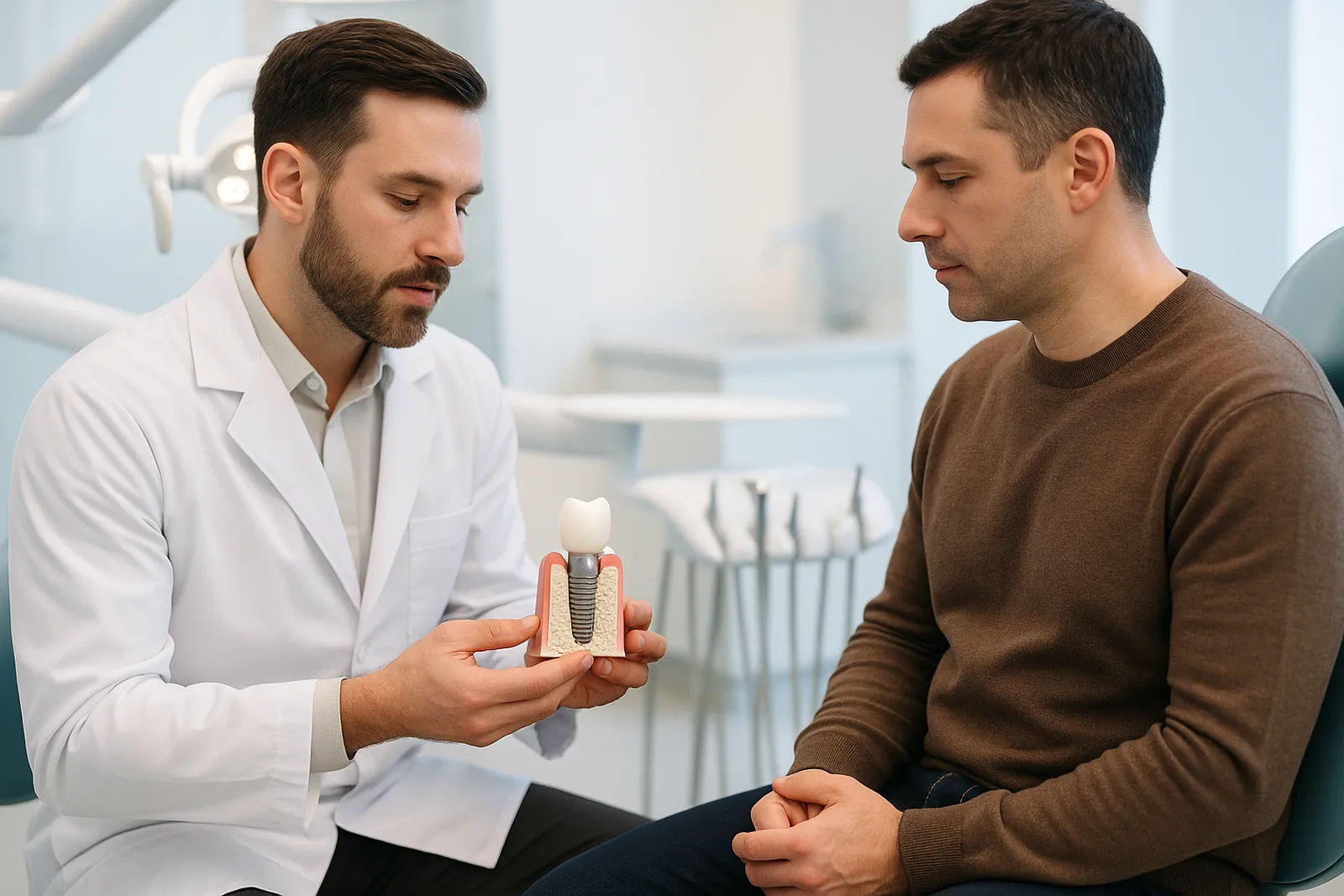
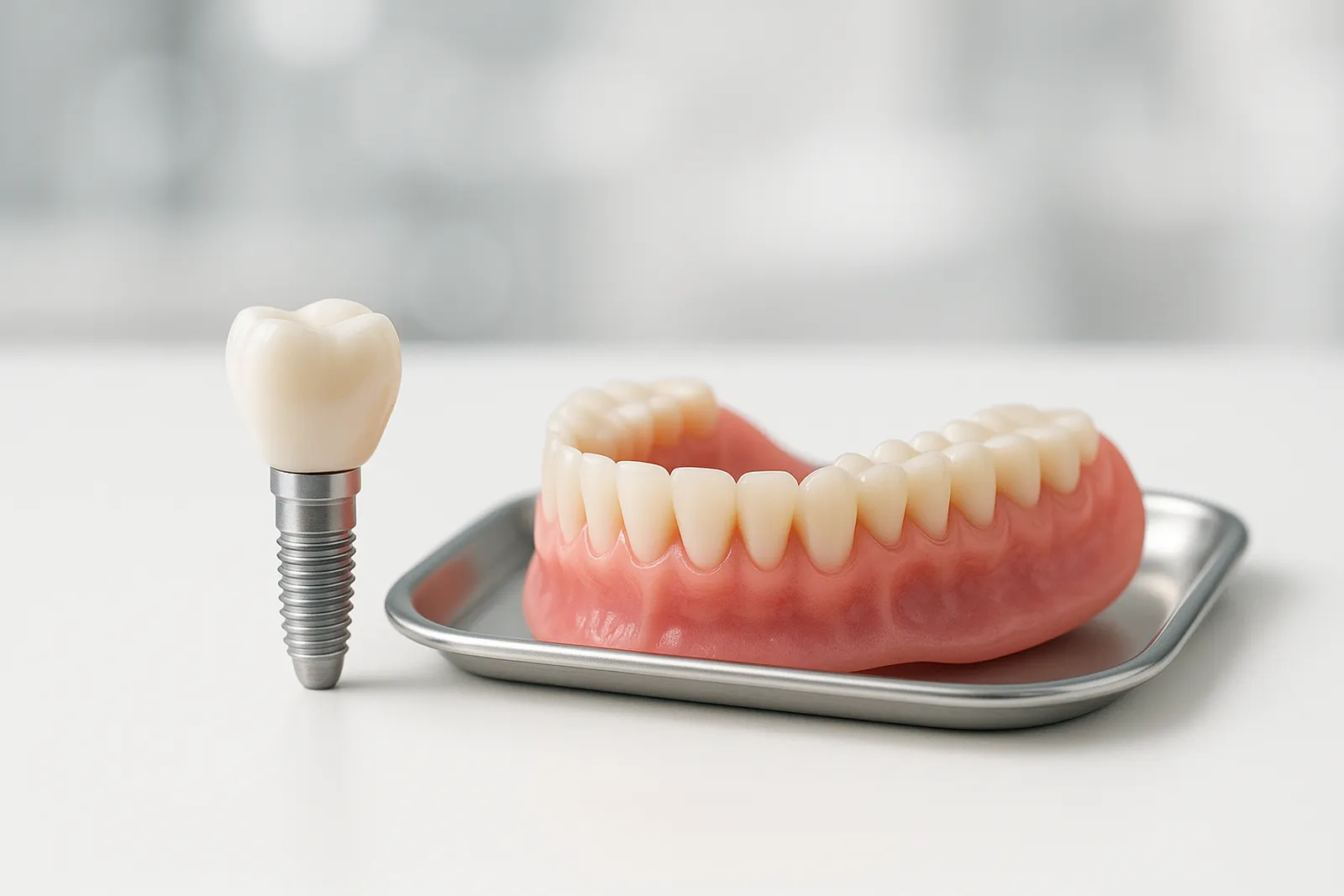
A dental implant is a titanium post that’s surgically placed into your jawbone, where it fuses with the bone over several months through a process called osseointegration. Once integrated, a custom crown, bridge, or full-arch prosthesis is attached to the implant, creating a permanent tooth replacement that looks, feels, and functions like your natural tooth.
Implants can replace a single tooth, several teeth, or an entire arch. At Miracle Dental Center, Dr. Alex Tyurin, a Fellow of the International Congress of Oral Implantologists, places implants with precision using advanced digital planning. From single tooth implants at $999 to full arch Teeth in a Day at $9,990, our practice offers the complete spectrum of implant-based solutions, including comprehensive Cosmetic Dentistry Services to enhance your overall smile.
How Dentures Work
Dentures are removable prosthetic devices that replace missing teeth and surrounding gum tissue. Partial dentures replace several teeth and clip onto remaining natural teeth, while full dentures replace an entire arch and rest on the gums. Modern dentures are more natural-looking and better fitting than those of previous decades, and they remain an important option for patients who aren’t candidates for surgery or who need an affordable solution.
Miracle Dental Center offers both partial and full dentures crafted with precision to provide the best possible fit and appearance. For patients who want the affordability of dentures with significantly improved stability, implant-supported dentures combine the two approaches.
Durability and Longevity
This is where the two options diverge most dramatically. Dental implants, with proper care, can last a lifetime. The titanium post becomes a permanent part of your jawbone, and the attached restoration can last fifteen to twenty-five years or longer before needing replacement. Dentures, on the other hand, typically need relining every one to two years and full replacement every five to ten years as the jawbone and gum tissue change shape.
Implants also prevent bone loss. When a tooth is removed, the jawbone beneath it begins to deteriorate. Implants replace the tooth root and provide the stimulation needed to maintain bone density. Dentures do not prevent bone loss and can actually accelerate it, which is why denture fit tends to worsen over time.
Comfort, Function, and Daily Life
Implants function identically to natural teeth. You brush them, floss around them, and eat whatever you want without restriction. There’s no removal, no adhesive, and no worry about slipping during meals or conversations. Patients who transition from dentures to implants consistently describe the improvement as transformative.

Dentures require daily removal for cleaning, and many wearers deal with discomfort, sore spots, reduced taste sensation, and limitations on what they can eat. Traditional dentures can also shift during speaking, creating self-consciousness in social situations. Implant-supported dentures address many of these issues by anchoring the prosthetic to implant posts.
Cost Comparison: Short-Term vs. Long-Term
Dentures have a lower upfront cost, which makes them an accessible option for many patients. However, the long-term costs of relining, replacement, adhesive, and the eventual need for implants or additional dental work add up significantly over a lifetime.
Implants have a higher initial investment but are often more cost-effective over the long run. At Miracle Dental Center, we provide transparent pricing and flexible financing — including CareCredit and payment plans — to make both options accessible. Our goal is to help you choose based on what’s genuinely best for your health and lifestyle, not just what’s cheapest today.
Who Is a Good Candidate for Implant-Supported Dentures?
Implant-supported dentures are an excellent middle-ground option for patients who want greater stability than traditional dentures can provide but don’t need or want a fully fixed implant restoration. Two to four implants per arch can dramatically improve denture retention, chewing function, and comfort.
Patients considering Full Mouth Restoration can benefit from implant-supported solutions, especially if multiple teeth are missing or failing. If you’re currently wearing dentures and struggling with fit, slippage, or discomfort, a consultation at Miracle Dental Center can help you explore whether implant-supported options would improve your quality of life.
Ready to Schedule?
Miracle Dental Center is ready to help you achieve the healthy, confident smile you deserve. Call us at (267) 990-8668 or to book your appointment today. We proudly serve patients from Feasterville-Trevose, Bensalem, Southampton, Langhorne, Huntingdon Valley, Newtown, and throughout Bucks County and Northeast Philadelphia.